Agile Development

Use Cases are the Hub of the Software Development Lifecycle

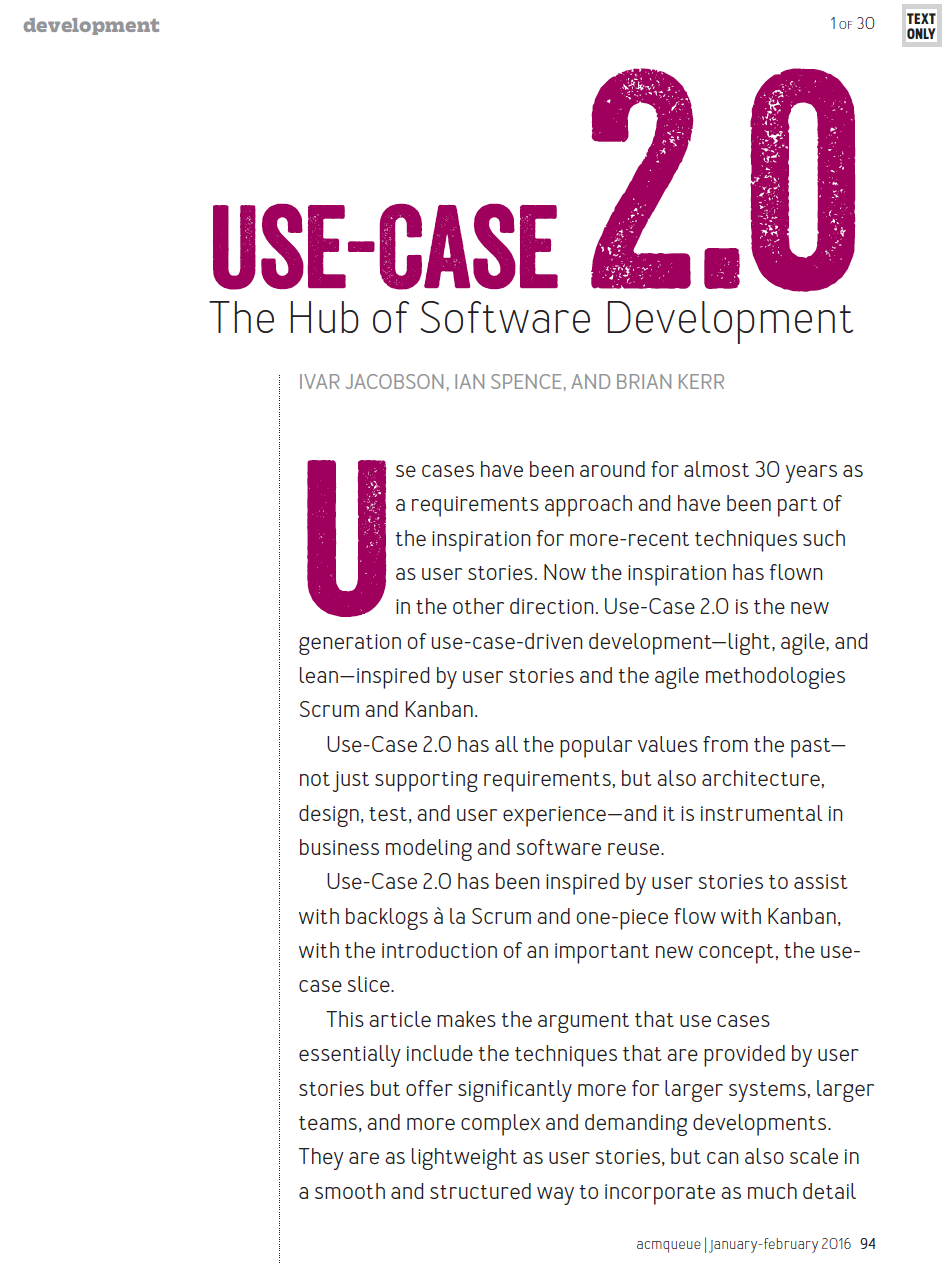
Use Case Definition:  Use Cases have been around for almost 30 years as a requirements approach and have been part of the inspiration for more recent techniques such as user stories. Now the inspiration has flown in the other direction. Use-Case 2.0 is the new generation of use-case driven development - light, agile and lean - inspired by user stories, Scrum and Kanban.

Alpha State Cards Guide  - Agile Coaching Tools

This Reference Guide provides a brief introduction to the Alphas and Alpha State Cards. It is designed to support the use the Alpha State Cards by software development teams and, in particular, the games that can be played with them.

SD times articles: leading sustainable agile change programs successfully

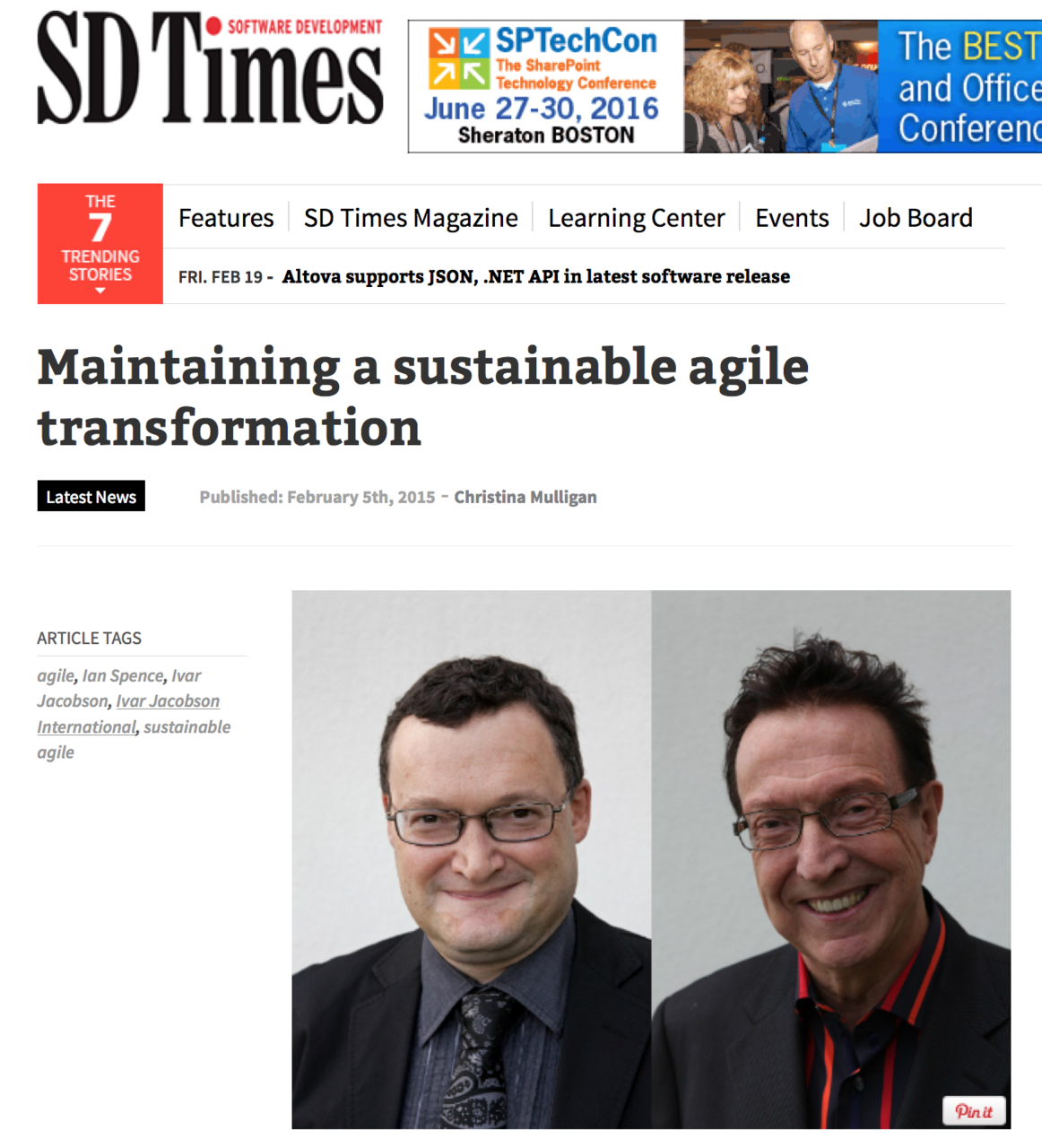
While many organizations have turned to agile as a way to streamline their development processes, the road to successfully implementing agile is bumpy. For organizations who want to achieve and maintain a sustainable agile transformation long-term, Ivar Jacobson, founder and chairman of Ivar Jacobson International, and Ian Spence, head of research and development at Ivar Jacobson International, shed some light on how to do that.

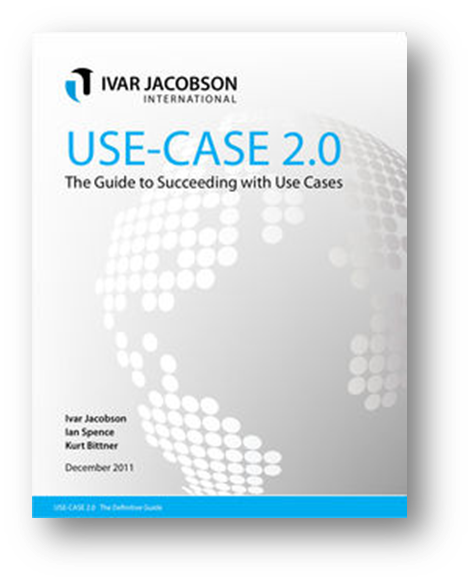
Image showing the cover of the Use Case 2.0 e-Book - The Guide to Succeeding with Use Cases

Use-Case 2.0 re-focuses on the essentials and offers a slimmed down, leaner way of working, for software teams seeking the benefits of iterative, incremental development at an enterprise level.

Image of the Use Cases 2.0 Book by Ivar Jacobson

Use-Case 2.0 re-focuses on the essentials and offers a slimmed down, leaner way of working, for software teams seeking the benefits of iterative, incremental development at an enterprise level

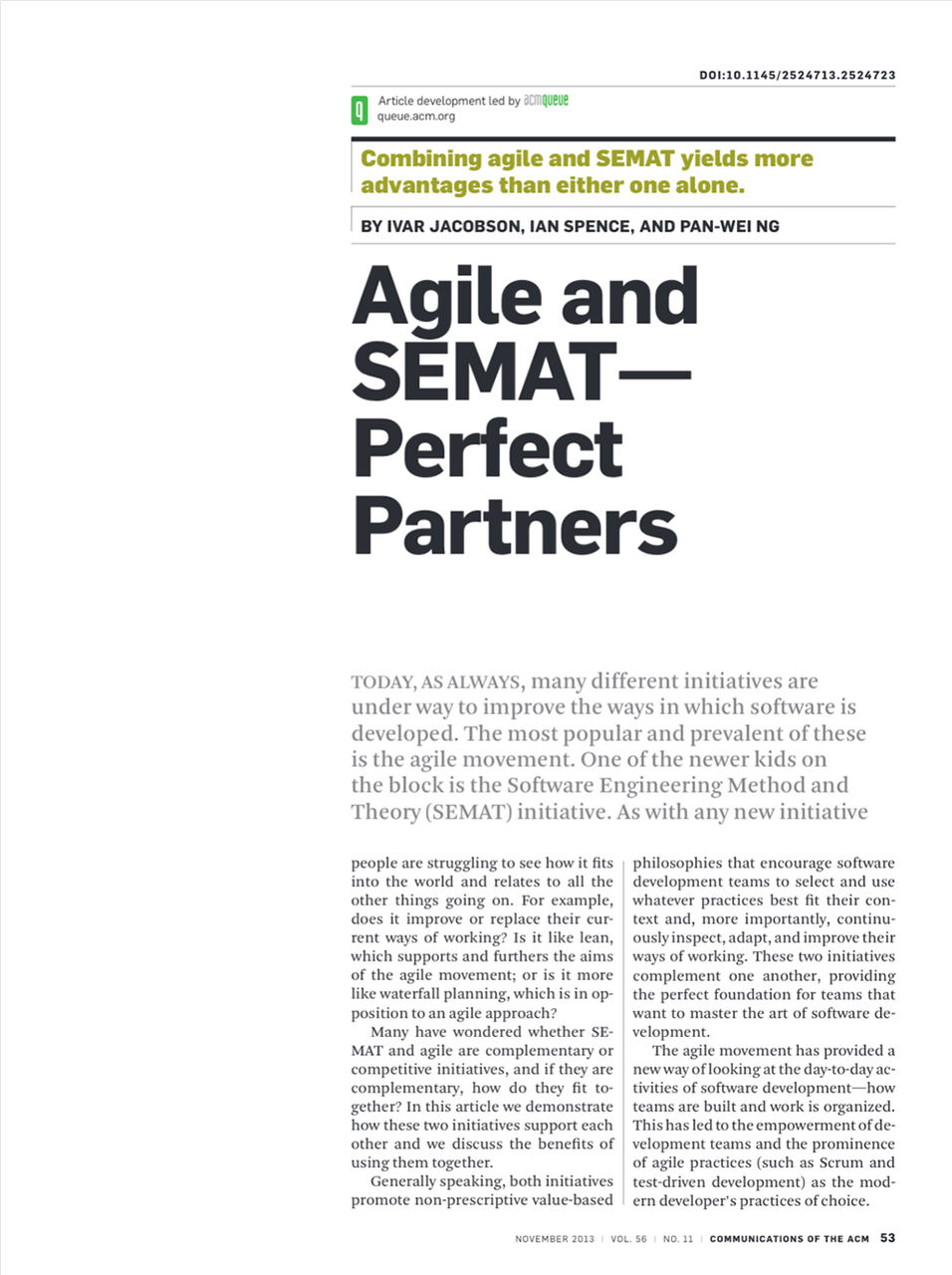
Agile and SEMAT Perfect Partners for Software Engineering Best Practices

Combining agile and SEMAT yields more advantages than either one alone. This paper discusses how two current popular movements complement one another to provide a powerful basis for software development.

Agile and SEMAT for Software Engineering Best Practices

In the same way that Google map shows you where you are, where you want to go, and the best way to get there when making a journey, SEMAT and Essence can do the same for teams of engineers developing software.

Agile and SEMAT Perfect Partners for Software Engineering Best Practices

Ben LInders interviews Ivar Jacobson and Ian Spence on the use of SEMAT within agile adoption. Published on InfoQ.

Kernel Journal Cover Page image

Roly Stimson, Principal Consultant with Ivar Jacobson International, has been blogging on the topic of a software practice Kernel. These posts are now put together into an 'ejournal'. Download and read at your leisure on your laptop or hand-held device.

Managing Iterative Software Development - Software Engineering Book

Iterative processes have gained widespread acceptance because they help software developers reduce risk and cost, manage change, improve productivity, and deliver more effective, timely solutions. But conventional project management techniques don't work well in iterative projects, and newer iterative management techniques have been poorly documented. "Managing Iterative Software Development Projects" is the solution: a relentlessly practical guide to planning, organizing, estimating, staffing, and managing any iterative project, from start to finish. Leading iterative development experts, Kurt Bittner and Ian Spence introduce a proven, scalable approach that improves both agility and control at the same time, satisfying the needs of developers, managers, and the business alike. Their techniques are easy to understand, and easy to use with any iterative methodology, from Rational Unified Process to Extreme Programming to the Microsoft Solutions Framework. Whatever your role- team leader, program manager, project manager, developer, sponsor, or user representative - this book will help you: * understand the key drivers of success in iterative projectsleverage "time boxing" to define project lifecycles and measure results * use Unified Process phases to facilitate controlled iterative development * master core concepts of iterative project management, including layering and evolution * create project roadmaps, including release plans * discover key patterns of risk management, estimation, organization, and iteration planning * understand what must be controlled centrally, and what you can safely delegate; transition smoothly to iterative processes * scale iterative project management from the smallest to the largest projects * and align software investments with the needs of the business. Whether you are interested in software development using RUP, OpenUP, or other agile processes, this book will help you reduce the anxiety and cost associated with software improvement by providing an easy, non-intrusive path toward improved results - without overwhelming you and your team.